Women have a long and storied tradition of fierce warriorship. Vietnamese women fought the French, South Vietnamese Regular Army and American troops in the decades following World War II. In a country of ancient art and religion, of poetry and song, and of resplendent physical beauty, these women suffered the horrors of war as active combatants. Some experienced many life shattering years of torture and imprisonment. Ultimately, all shared in victory in defense of their homes and country. But, as is always the case in war, their victory is not without its contradictions, losses, and sorrows.
Beirut – or indeed maybe any city, anywhere – is at war with itself. Here, no conflict is ever resolved, and no wall is ever repaired. The explosions resonate better in this city full of holes. Young men who live here are caught between military service and religious affiliation. I visit some friends, gather their suicidal testaments. No one goes anywhere. I cross my city in every way possible, day and night. 16mm
Set in a small village in Vientiane Province in the early 1970s. Pathet Lao troops have gained the upper hand over the US-backed Royal Laotian army. The government wants to use the village as a base for a counter-offensive.
A soldier is struggling to obey his duty or listen to his heart during a military operation.
Combat Bulletin was a new reel type series keeping folks up-to-date with the combat of World War II.
Documentary short film depicting the successful Allied advance into Rome, freeing it from German control during World War II.
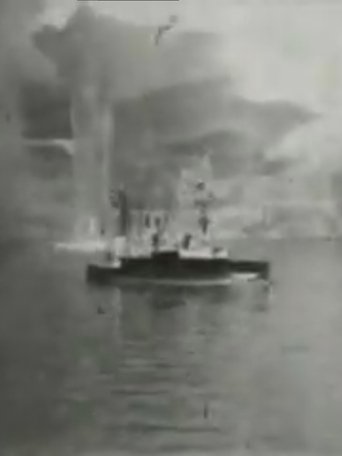
The scenes opens by showing the battleships maneuvering for a position. They finally draw up in line of battle and commence firing on the shore batteries. Immense volume of smoke arise from the fleet and from the distance shore. Shots are seen to fall thickly among the vessels and immense bodies of water are thrown up by the explosion of mines.
Documentary short film explaining the need for increased production of war materials such as artillery shells and bullets as the pace of the Allied war effort increases.
In August-September of 1939 Adolf Hitler and Joseph Stalin divided up the European countries between themselves, via a secret annex protocol in the Soviet-German non-aggression pact. Empowered by this document, Germany invaded Poland on 1. September 1939. Two days later Britain and France declared war on Germany. The Second World War was on. Due to the territorial divisions of the secret annex protocol, Finland ended up the target of attacks lunched by the Soviet Union, first on 30. November 1939 (the Winter War) and then again on 25. June 1941 (the Continuation War). In spite of the harsh conditions and having to fight an overwhelming enemy, Finland managed to keep her independence.
Documentary short film depicting the breakthrough of Von Rundstedt's German forces in Europe and how complacency on the American homefront may have contributed to near-disaster for the Allies.
In the closing days of World War II, a concentration camp escapee is recaptured by a quartet of Nazi Officers waiting out a storm in a remote woodland cabin.
National Geographic Channel (NGC) journeys back to Nazi Europe to tell the story of Hitler's Hidden Holocaust -- the killing frenzy of Hitler's extermination brigades, known as the Einsatzgruppen or "action groups." Woven together with harrowing testimonials from survivors, witnesses and experts, this one-hour special presents in chilling detail -- with photographic evidence and rare video footage - how Nazi soldiers planned, documented and committed these horrific crimes. It was the same routine: Go into a town, round up Jewish families, take them to a ditch and shoot them, often in front of curious spectators.
Mysterious man called Gringo chases after Kwaschestein supported by his friends.
A couple is attacked by warriors.
Seventy years ago one of the greatest amphibious assaults in history was launched from here on the south coast of England. And within a matter of hours, 7000 vessels had landed 156,000 troops on the beaches of Normandy. It was a manoeuvre that changed the course of the war and tested innovations in science and engineering for the first time. On this programme, engineer Rob Bell looks at the nuts and bolts which made such a staggering invasion possible. From giant troop carrying gliders to tanks that could drive on water. How necessity really did become the mother of invention. Like all new inventions - not all of them worked and resulted in devastating consequences. We find out why. This is the science of D-Day.
Australia Prepared highlights the country's contributions to the First World War, beginning with the recruiting of soldiers after war is declared. Segments include: footage of troops training at Liverpool Camp, NSW; the manufacture of rifles and ammunition; shipbuilding at Cockatoo Docks; and the production of khaki soldiers' uniforms.
A dispatch rider gets through a Boer ambush.
Activate Your Account!
You must create an account to continue watching