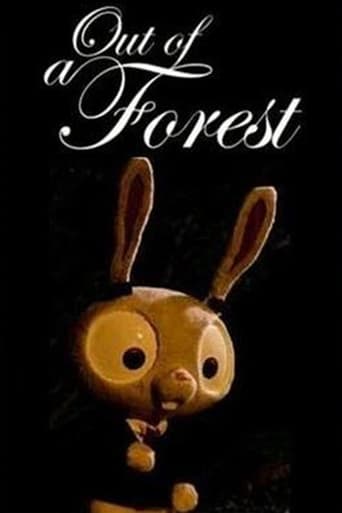
While one kid is being bullied, another one witnesses the revolting situation. Filled with guilt, fear, and powerlessness; he starts wondering if just minding his own business is the right thing to do.
After hours, individuals on various magazine covers in a drugstore come to life and sing, speak, or perform. Caricature celebrity depictions include George Arliss, Eddie Cantor, Sonja Henie, Benito Mussolini, Ignacy Paderewski, Edward G. Robinson, Will Rogers, and Ed Wynn. A robbery sequence features bad guys breaking into the cash register and Sherlock Holmes and Dr. Watson on the case. King Kong also makes an appearance. A Merrie Melody cartoon.
A little mouse runs away from home and goes to sea. Aboard the ship, a rat starts to educate the mouse on the ways of sea-farin' mice by sending him to the galley to steal cheese from the Captain's table. But the Captain's parrot, a sea-goin' snitch, spots the thievery and squawks loud and long about it. That brings the whole crew down after the mouse, who gets away and learns that there is no place like home.
After the original run of the television series, an OAV music video titled Genesis Climber Mospeada: Love Live Alive was specially (mostly due to demands of hardcore Mospeada fans) released in Japan in September 1985. The music video consisted of both old and new footage. The story of Love Live Alive chronicled the events after the ending of the original Mospeada, featuring Yellow Belmont as the main character. The music video focused on Yellow's concert and also on his flashback of past events.
Uncle Wormsley is a grey, decaying old man with cobweb-like hair and rotten fingernails. A lone figure who keeps himself to himself, Wormsley's only friend is a monstrous crab called Crabsley, who lives in a dungeon under his house.
Set in the town where the Sumikkogurashi characters live, the film follows a mysterious tale that takes place on the night of the great blue full moon that occurs once every five years.
A family of rabbits are having a birthday party under a big tree, unaware that a mischievous wolf is approaching.
When Pluto eats a bar of soap and ends up with a mouth full of suds, the neighborhood thinks he's caught rabies.
Japanese trains. Non-places. An intense travel experience through time and space. From Matsuo Bashō's haikus to images of a vanishing world created by Hokusai in Manga catalogues.
A dog decides to quit the slapstick comedy of cartoons and go to his country home to concentrate on Shakespeare, but two troublesome yet polite gophers foil his grand plans.
This film is an humorous view on the conflict of pedestrians with all growing car traffic.
The 25th movie in the series, Go! Anpanman: Fly! The Handkerchief of Hope. Go! Anpanman: Fly! The Handkerchief of Hope features Pao, a small elephant boy who lives above the clouds. Every day, Pao practices at the house of Saji Ojisan, who cleans the sky with handkerchiefs coming out from his nose, so that one day he will be able to to do the same. However, it doesn’t go well, and he always fails. Thinking there is nothing he can do and nothing would ever go well, he unconsciously closes himself off to the world. Meanwhile, Baikinman is organizing the “Baikin Circus.” The newest mecha called Amazing Elephant morphs into Dirty Elephant and starts polluting the town. Pao seems to break down because of his lack of usefulness, but seeing how Anpanman never gives up and faces any difficulty, he decides to go forward and hold onto hope.
Semi based on real events...
A butterfly collector seeks the last missing piece of his collection.
In a tourist mountain village, the train passes permanently through the place. Everything is so saturated with activity that the purity of its air has been lost and pollution has put an end to contacts between people. The characters represent a society organized by consumption and all their vicissitudes are related to it.
The other kids never ask Dong-Dong to play, but he’s fine just playing marbles on his own. Until one day, he buys a bag of colorful candies and begins to discover new voices and perspectives.
A little girl finds out her big voice can come in handy in an emergency.
Loneliness: a trucker who calls out on his CB radio waiting for a reply that never comes. A ghost that haunts the deserted highways. A whale that sings at a frequency no other whale can even hear.
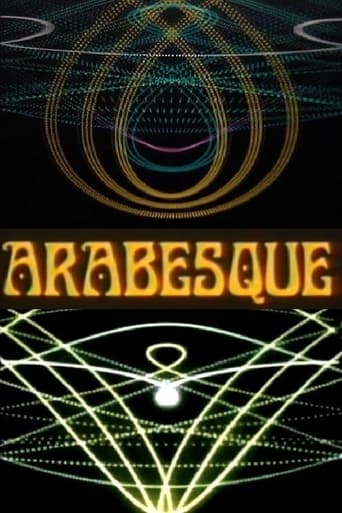
John Whitney's pioneering work of computer animation, Arabesque, from 1975. This flowing, abstract short film is a wonder to behold, a work of art. Like many other computer graphics pioneers, this film suggests roots in psychedelics and spiritual quests as much as engineering and mathematics. Preserved by the Academy Film Archive in 2007.
Activate Your Account!
You must create an account to continue watching